Student Accommodation in France: CROUS, Private Rentals & VISALE Guide for Pakistani Students
Finding a place to live is the biggest practical worry for most students heading to France, and it’s also a question your Campus France interviewer will ask directly.
By the Westside advisers, DHA Lahore · Reviewed September 2026 · 10 min read
Earlyapply for housing as soon as you are admitted
Rent is a French student’s single biggest expense, and “Where will you live in France?” is a question the Campus France interviewer really does ask. So getting your accommodation sorted isn’t just about comfort, it’s part of a successful application. Fortunately, France runs one of the most student friendly housing systems in Europe, with subsidised residences, a free rent guarantor service, and housing aid. The catch? The best options are competitive, so you apply early and plan smart. Let’s walk through it all.
France runs a student friendly housing system, if you know it and apply early.
We’ll cover every housing type and what it costs, how CROUS works, private rentals and flat sharing, the free VISALE guarantor, how to prove accommodation for your visa, and how to answer the interview question. Let’s find you a home in France.
Who is this guide for?
Pakistani students heading to France who need to understand, find, and secure student accommodation, and prove it for their visa.
Why Accommodation Matters (More Than You Think)
Housing isn’t just a practical detail in France, it touches your budget, your visa, and your interview:
Your biggest cost rent is the largest part of a student’s monthly budget.
An interview question “Where will you live?” is regularly asked at the Campus France interview.
A visa requirement you usually show proof of accommodation for your student visa.
It affects your funds a cheaper housing plan makes your proof of funds more realistic.
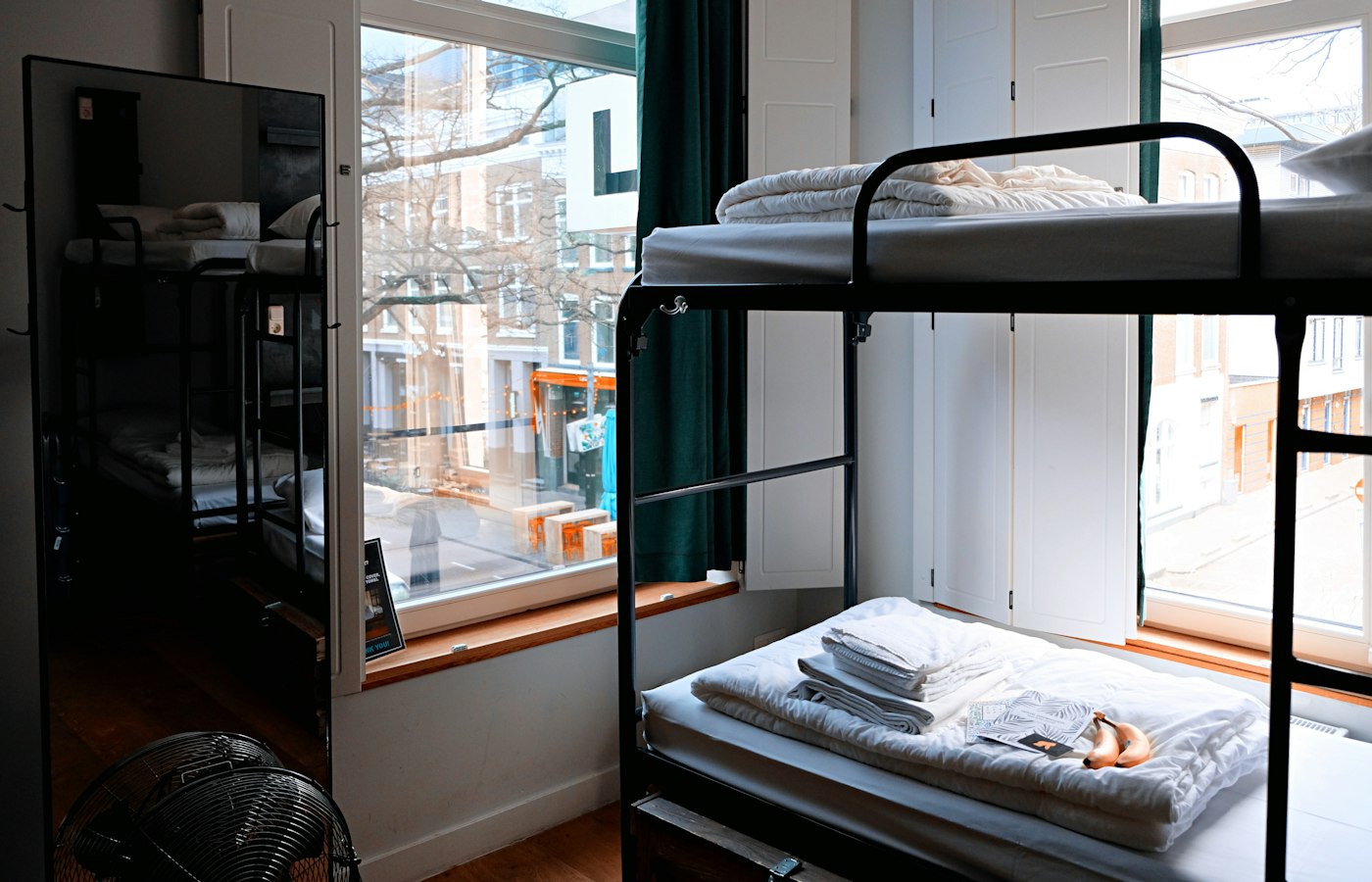
CROUS rooms are the cheapest option but fill up quickly.
Housing Types & What They Cost
France offers several kinds of student housing. Here’s the landscape, from cheapest to priciest:
~€200 to 400/mo
CROUS residences
Public, subsidised student housing, the cheapest option (around €200/month in regional cities, ~€400 in Paris). Competitive, so apply early. More below.
CheapestPublicApply early
Varies
Private student residences
Purpose built private halls with amenities (gym, study rooms, furnished). Mid priced, convenient, and easier to book than CROUS.
FurnishedAmenitiesEasier to book
Higher
Private rentals (studio/apartment)
Rent your own studio or flat through consultancies or landlords. More freedom, but pricier, and you’ll usually need a guarantor and deposit.
IndependentPricierGuarantor needed
Shared cost
Colocation (flat sharing)
Share a flat with other students to split rent and bills, a great way to cut costs and make friends.
CheaperSocialSplit bills
Free / low
Family / host & temporary
Staying with a relative or host on arrival, or a hotel/hostel for the first days while you finalise longer term housing.
On arrivalTemporaryBackup
Mix and match:
Many students stay somewhere temporary on arrival (a relative, hostel, or short let) while their CROUS or rental is finalised. Have a plan A and a plan B, housing in France rewards those who prepare options.
Not sure how this applies to you?Send us your details and a Westside adviser will tell you honestly where you stand. Free 30 minute assessment.
CROUS residences are the cheapest option, but competitive, so apply early.
CROUS is the public body that runs subsidised student housing across France. It’s the most affordable route, and worth applying for early:
Cheapest housing around €200/month in regional cities, ~€400 in Paris.
Apply online through the official student services portal (messervices.etudiant.gouv.fr / the DSE process).
Very competitive demand far exceeds supply, especially in big cities, so apply as early as the window opens.
Simple rooms basic but functional; some are studios, some shared facilities.
Great value the single biggest way to keep your rent low.
Apply the moment the window opens:
CROUS places are limited and go quickly. Applications for the coming year typically open in the spring, so watch the dates and apply immediately. Never rely on CROUS alone, always have a backup (a private residence or shared flat) ready.
Most landlords ask for a guarantor, which VISALE can provide.
Private Rentals & Colocation
If CROUS doesn’t come through, the private market is your main route. Here’s how it works:
Consultancies & listings find rentals through consultancies or trusted online platforms.
What landlords ask for usually proof of income/funds, a guarantor, a deposit (often 1 month), and ID.
Deposit & first rent budget for a deposit plus your first month upfront.
Colocation (flat sharing) splitting a flat with others cuts rent and bills significantly.
Furnished vs unfurnished furnished (meublé) is easier for arriving students.
Sharing is the smart budget move:
Colocation (flat sharing) can dramatically cut your rent and give you an instant social circle. If CROUS isn’t available, a shared flat is often the next best value option, and it’s popular with international students.
VISALE: the Free Guarantor Every Student Should Know
Here’s a problem many students hit: French landlords want a guarantor (garant) based in France, and most Pakistani students don’t have one. The solution is VISALE:
What it is to a free, government backed rent guarantor service for students.
What it solves it acts as your guarantor when you don’t have one in France.
Free to use there’s no cost to the student.
Available with VLS TS student visa holders can use it.
Landlord reassurance it makes landlords far more willing to rent to you.
VISALE is a game changer:
The lack of a French guarantor stops many international students from renting privately. VISALE removes that barrier for free, so apply for it early and mention it to landlords, it makes your application much stronger.
Sharing a flat is a popular way to cut costs.
Proof of Accommodation for Your Visa
Have concrete accommodation proof ready for your visa and interview.
At the visa stage, you usually need to show where you’ll live. Acceptable proof includes:
CROUS reservation confirmation of your student residence allocation.
Rental contract (bail) a signed lease for a private rental.
Private residence booking confirmation from a student residence.
Host attestation if staying with a relative/host: their attestation of accommodation + their ID + a recent utility bill.
Hotel booking a temporary booking if you’ll finalise housing after arrival.
Have something concrete ready:
Even if your long term housing isn’t finalised, you need a credible accommodation plan and proof (a booking, a host attestation, or a temporary reservation) for your visa and interview. “I’ll figure it out there” is not a strong answer.
Home Insurance & CAF Housing Aid
Two more things every renter in France should know:
Home (renter’s) insurance assurance habitation is compulsory in France; you must have it to rent.
It’s affordable student home insurance is cheap and easy to arrange.
CAF housing aid (APL/ALS) a monthly subsidy that can reduce your rent, paid into your French bank account.
2026 CAF change from July 2026, self funded non EU students may no longer qualify for APL; budget without it to be safe.
Don’t count on CAF if you’re self funded:
The 2026 rules tightened housing aid for non EU students who aren’t scholarship holders. If that’s you, budget an extra €150 to €200/month and treat any CAF you do receive as a bonus. See our
life in France guide
for the full admin picture.
Not sure how this applies to your case?
Send us your question on WhatsApp. A Westside adviser in DHA Lahore will reply, Monday to Saturday, 10:00 to 18:00.
A clear, specific housing plan is exactly what the interviewer wants to hear.
This is a real Campus France interview question, and a vague answer hurts you. Here’s how to answer well:
Show a clear plan name your intended housing type and city.
Mention CROUS say you’ve applied (or will apply) for a CROUS residence.
Have a backup mention private residences or a shared flat as your plan B.
Know the cost show you understand what it costs and how you’ll pay for it.
Reference temporary plans e.g. staying with a relative or a short booking on arrival.
A strong model answer:
“For the first weeks I’ll stay [with my relative / in a booked short let] while my CROUS application is processed. If CROUS isn’t available, I’ll take a private student residence or a shared flat, and I’ve budgeted around €[X] per month for rent.” Confident, specific, and prepared, exactly what the officer wants to hear.
When to Apply for Housing
Timing is everything with French student housing. Follow this rough plan:
Finalise your lease, take out home insurance, apply for CAF if eligible
Quick Facts
Student Accommodation in France, Key Facts
Cheapest option
CROUS (~€200 regional, ~€400 Paris)
CROUS apply via
messervices.etudiant.gouv.fr (DSE)
Free rent guarantor
VISALE (government service)
Cut costs
Colocation (flat sharing)
Visa proof
CROUS reservation, lease, host attestation, or booking
Home insurance
Compulsory (assurance habitation)
CAF housing aid
Restricted for self funded non EU from Jul 2026
Apply for CROUS
As early as the spring window opens
Interview question
“Where will you live in France?”
Housing Mistakes & Scams to Avoid
Housing is where students lose money and time. Steer clear of these:
Applying for CROUS too late
CROUS places are limited and competitive; late applicants miss out and pay more.
Avoid it: Apply the moment the CROUS window opens (usually spring), and have a backup ready.
Paying upfront for a listing you haven’t seen
Rental scams target international students, fake listings that demand a deposit before you arrive.
Avoid it: Never send money for an unseen property; use trusted platforms and verify before paying.
Not knowing about VISALE
Struggling to rent because you lack a French guarantor, when VISALE would have solved it for free.
Avoid it: Apply for VISALE and use it as your guarantor for private rentals.
A vague interview answer
“I’ll figure out housing when I get there” signals poor planning at your Campus France interview.
Avoid it: Have a clear, specific housing plan (with a backup) and know the cost.
No accommodation proof for the visa
Turning up to the visa stage without any accommodation proof weakens your application.
Avoid it: Secure a booking, contract, or host attestation before your visa appointment.
Forgetting home insurance
Renting without compulsory home insurance can cause problems signing or keeping your lease.
Avoid it: Arrange affordable student home insurance (assurance habitation) as you sign your lease.
How Westside Visa Helps You Find Housing
Arrive in France with your housing sorted, or a solid, confident plan.
Here’s the honest truth: securing accommodation from Pakistan, before you’ve even arrived, is genuinely stressful, and a weak housing plan can hurt your interview and visa. Understanding the options, applying to CROUS on time, using VISALE, and preparing the right proof is exactly where guidance helps. That’s where we come in.
At Westside Visa, our consultants in DHA Lahore help Pakistani students plan their France accommodation. We help you:
Understand your options CROUS, private, colocation, and more.
Apply to CROUS on time so you don’t miss the competitive window.
Use VISALE to solve the guarantor problem for free.
Prepare accommodation proof, for your visa and interview.
Answer the interview question with a clear, confident housing plan.
Avoid scams and budget realistically for rent and insurance.
We help you arrive in France with a roof sorted (or a solid plan), so housing never derails your studies or your visa. Think of us as your teammate, experienced, transparent, and fully on your side.
France 2027 intake series from Westside Visa Consultants
The right housing plan keeps your budget, visa, and interview strong. Westside Visa helps you secure it from Pakistan, with honest, expert advice you can trust.
What is the cheapest student accommodation in France? +
CROUS residences are the cheapest, around €200/month in regional cities and ~€400/month in Paris. They’re public and subsidised but very competitive, so apply the moment the window opens (usually spring). Colocation (flat sharing) is the next best value option if CROUS isn’t available.
How do I apply for CROUS housing? +
You apply online through the official student services portal (messervices.etudiant.gouv.fr, via the DSE process). Applications for the coming year typically open in spring, and demand far exceeds supply, so apply as early as possible. Always keep a backup (private residence or shared flat) ready in case CROUS places run out.
What is VISALE and do I need it? +
VISALE is a free, government backed rent guarantor service. French landlords usually want a guarantor based in France, which most Pakistani students don’t have, and VISALE solves this by acting as your guarantor at no cost. It’s available to student visa holders and makes renting privately much easier, so apply for it early.
What accommodation proof do I need for the visa? +
Acceptable proof includes a CROUS reservation, a signed rental contract, a private residence booking, a host attestation (with the host’s ID and a recent utility bill) if staying with a relative, or a hotel booking for temporary stays. Have something concrete ready, “I’ll figure it out there” is not a strong answer for the visa or interview.
Can I get help paying rent in France? +
CAF offers a monthly housing subsidy (APL/ALS) that reduces rent, paid into your French bank account. However, from July 2026, self funded non EU students who aren’t scholarship holders may no longer qualify. If that’s you, budget an extra €150 to €200/month and treat any CAF you receive as a bonus. Home insurance (assurance habitation) is also compulsory.
Does Westside Visa help with accommodation? +
Yes, we help you understand your options, apply to CROUS on time, use VISALE to solve the guarantor problem, prepare accommodation proof for your visa, answer the “where will you live?” interview question confidently, and avoid scams. Contact us to get started.
This guide is general information from Westside Visa Consultants, not legal advice. Visa rules change often, so always confirm the latest position on the official government website before you apply.
This is your one page master checklist for the France September 2027 intake, everything in one place. Every document you’ll need, every deadline you can’t miss, the full timeline, and the first week tasks in France.
The September 2027 intake is your biggest opportunity to study in France, and the official Campus France calendar is already confirmed. The platform opens on 1 October 2026, and the first deadlines fall in December 2026.
France changed its money rules in 2026, and every one of them affects Pakistani students entering in 2027. Tuition is now differentiated, fee exemptions are shrinking, and the proof of funds requirement jumped by 43%.
France has two very different worlds of higher education: public universities and Grandes Écoles. One is affordable and admits on your academic file; the other is elite, selective, and built on powerful networks.
Here’s some good news that comes with your French student visa: you’re allowed to work part time alongside your studies, up to 964 hours a year. This isn’t a separate work visa, it’s a right that comes with student status.
Saad was living in Tbilisi and felt stuck. Westside handled his KEDGE Business School admission and French student visa from Lahore. Why France beats Georgia for 2027.