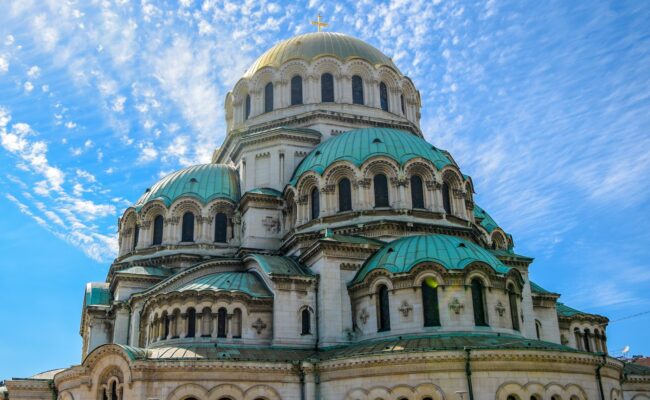
For many Pakistani students, a European education feels out of reach, too expensive, too competitive, too complicated. Bulgaria quietly changes that. As a full EU member that has now joined the Schengen Area, Bulgaria offers a genuine European degree at some of the lowest tuition and living costs on the continent, with plenty of English taught programs and a straightforward student visa. If you’re planning to study in Bulgaria from Pakistan, this guide gives you the honest, complete picture for 2027/2028.
Bulgaria offers an affordable EU + Schengen degree with English taught programs.
We’ll cover why Bulgaria is worth considering, exactly who qualifies, the full Type D student visa process, every document you need, how much money to show, real tuition and living costs, and the rejection reasons that catch students out. Let’s map your route to an EU degree.
The Bulgaria advantage in one line:
An EU + Schengen degree, taught in English, at a fraction of Western European costs, with Europe’s lowest income tax (a flat 10%) if you stay to work afterwards.
Why Study in Bulgaria From Pakistan?
Before the process, it helps to understand why Bulgaria has become a smart choice for Pakistani students. The reasons are practical and compelling:
It’s a full EU member your degree is a recognised European qualification with EU academic standards.
Now in the Schengen Area Bulgaria joined Schengen in 2027/2028 , so your residence opens up travel across Europe.
Affordable tuition far lower than Western Europe, with many programs from €2,500 to €3,500 a year.
Low living costs around €400 to €650 a month, among the cheapest in the EU.
English taught programs full degrees in English across medicine, engineering, IT, and business.
Lowest EU income tax a flat 10%, valuable if you work part time or stay on after graduation.
A path to EU residency long term resident status after five years opens doors across Europe.
Bulgaria vs the “big” destinations:
You get a genuine EU degree and Schengen access without the extreme tuition of the UK or the fierce competition of Germany. For value focused Pakistani students, that combination is hard to beat.
Your Type D visa file starts with the university admission letter.
Who Can Study in Bulgaria: Eligibility & Requirements
Bulgaria’s entry requirements are reasonable and clear. Here’s what you generally need to qualify:
Academic requirements
12 years of schooling Matric plus Intermediate (FSc) or O Level plus A Level equivalents.
Field relevant subjects science subjects (Physics, Chemistry, Biology) for medicine and engineering.
Recognised qualifications your certificates must be attested and match Bulgarian university standards.
English proficiency (no universal IELTS, no MDCAT)
English proof varies some universities ask for IELTS or TOEFL; others assess your English at admission instead.
No IELTS at some universities many evaluate language ability during the admission process rather than by test.
No MDCAT for medicine Bulgaria does not require Pakistan’s MDCAT; medical schools use their own entrance exam.
Always confirm per university:
Requirements differ between institutions and programs. Check each university’s exact English and subject requirements before you apply, or let us confirm them for you.
Not sure how this applies to you?Send us your details and a Westside adviser will tell you honestly where you stand. Free 30 minute assessment.
To study in Bulgaria long term, Pakistani students need the Type D visa, Bulgaria’s long stay visa. Here’s what it is and how it fits in:
A long stay entry visa the Type D lets you legally enter Bulgaria for full time study.
For accredited universities issued once you’re accepted into a recognised Bulgarian institution.
Fee around €100 paid when you submit your application (non refundable).
Applied in Pakistan at the Bulgarian Embassy in Islamabad (or an authorised centre).
Leads to a residence permit after arrival, you convert to a residence permit for your full stay.
Type D vs Type C:
The Type D is the long stay study visa. A Type C is a short stay visa (now a Schengen visa for Bulgaria, up to 90 days), which is for tourism or short visits, not for studying. For a full degree, you always need the Type D.
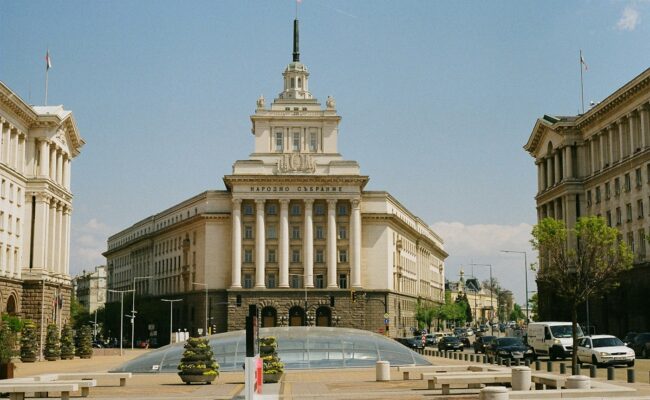
Bulgarian universities welcome a growing number of Pakistani students.
Step by Step: How to Apply to Study in Bulgaria
The Bulgaria application runs from university choice to your Type D visa.
Here’s the full journey from choosing a university to landing your Type D student visa, in order:
Choose your university & English taught program Shortlist accredited Bulgarian universities offering your field in English. Confirm the exact entry and English requirements.
Apply online for admission Submit the application form, passport copy, your Matric/Inter (or O/A Level) certificates, birth certificate, photos, and English proof.
Receive your acceptance letter & pay tuition deposit Once accepted, you’ll get an official acceptance letter and usually pay part of the tuition to reserve your seat.
Attest, apostille & translate your documents Get your academics attested (IBCC/HEC), apostilled by MOFA, and translated into Bulgarian, in the correct order.
Apply for the Type D visa & attend the interview Submit your visa file at the Bulgarian Embassy in Islamabad, pay the fee, and attend the interview if required.
Start early:
Attestation and apostille alone can take weeks, and visa processing takes 4 to 8 weeks. Begin the whole process 2 to 3 months before your semester starts to stay comfortable.
Full Document Checklist for the Bulgaria Student Visa
Your Type D student visa file must be complete and correct. Here’s what you’ll typically need:
Visa application form completed and signed.
Passport valid at least 3 months beyond your stay, with 2 blank pages, issued within the last 10 years.
Photograph 3.5 × 4.5 cm, light background, face 70 to 80% of the frame, no dark glasses or head coverings (except religious).
University acceptance letter official and valid, from a recognised institution.
Tuition payment receipt proof you’ve paid the required deposit.
Bank statement showing sufficient funds (see below).
Health insurance valid across the EU for your stay.
Accommodation proof where you’ll live in Bulgaria.
Police clearance certificate (PCC) confirming no criminal record.
Medical certificate showing you’re in good health.
Travel ticket a copy of your booking.
Attested academic documents attested, apostilled, and translated into Bulgarian.
The #1 Bulgaria rejection cause:
A broken attestation chain or a formal documentary error. Bulgaria is strict on paperwork, so every document must be attested in the right order and correctly translated. Double check everything before submitting.
Living costs in Bulgaria are among the lowest in the EU.
Proof of Funds for the Bulgaria Student Visa
Genuine, consistent proof of funds matters more than a big last minute number.
Bulgaria wants to see you can support yourself. The financial proof is modest compared to many countries:
Around €500 per month the guide figure for living expenses.
Roughly €3,000 to €4,000 for the year shown in a bank statement, plus your tuition.
Your or a sponsor’s account funds can be in your own or a parent/sponsor’s account.
Tuition coverage too you should show you can pay tuition on top of living costs.
Consistency beats a big number:
A sudden large deposit a week before applying is a classic red flag. Build and show funds that look genuine and consistent over time, this is exactly the financial consistency issue that sinks otherwise strong applications.
Tuition Fees in Bulgaria by Field
Tuition depends heavily on your field. Here’s the 2027/2028 landscape for international students:
Field of study
Approx. tuition (per year)
Business & management
€1,100 to €3,000
IT & engineering
€2,500 to €3,500
MBA / postgraduate business
€3,000 to €10,000
Medicine & dentistry (MBBS)
€7,000 to €8,000
Still affordable at the top end:
Even medicine at €7,000 to €8,000 a year is far cheaper than comparable Western European or private options, while IT and business are remarkably low cost for an EU degree. See our
MBBS in Bulgaria guide
for the medical route.
Cost of Living in Bulgaria for Students
Living costs are one of Bulgaria’s biggest draws. Expect roughly:
€400 to €650 per month all in, depending on your city and lifestyle.
Accommodation student dorms and shared flats keep housing low.
Food & transport affordable, with student discounts available.
Cheaper than most of the EU your money stretches much further than in Western Europe.
Not sure how this applies to your case?
Send us your question on WhatsApp. A Westside adviser in DHA Lahore will reply, Monday to Saturday, 10:00 to 18:00.
Valid about 1 year and renewed annually until you complete your studies.
Your legal basis to stay keep it valid throughout your program.
Don’t miss the 90 day window:
Applying for your residence permit on time is essential to keep your stay legal. Plan for it as soon as you arrive.
Can You Work While Studying in Bulgaria?
Yes, within limits. Part time work can help with daily costs:
Around 20 hours a week the part time limit for students, subject to residence permit conditions.
A helpful supplement useful for living costs and experience.
Not a funding plan never rely on part time work to fund your studies or meet your proof of funds.
Study first, earn second:
Part time work is a bonus, not the foundation of your budget. Your proof of funds must be genuine and independent of any expected earnings.
Top Universities in Bulgaria for International Students
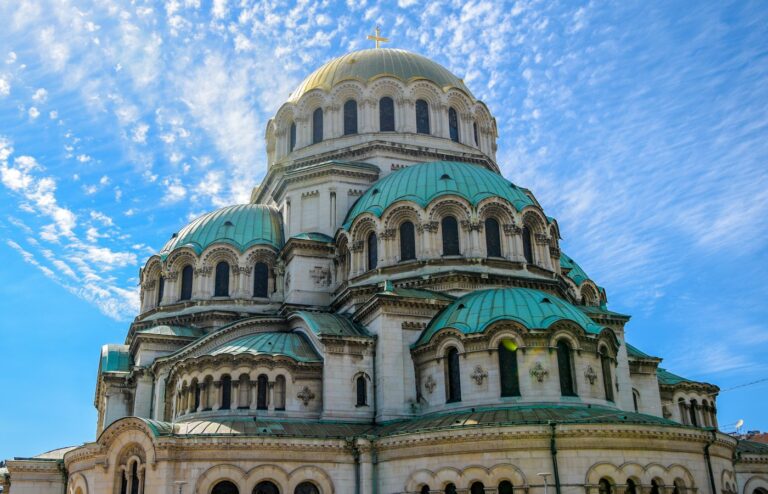
Bulgaria has strong English taught universities across medicine, IT, and business.
Bulgaria has well regarded universities offering English taught programs across fields:
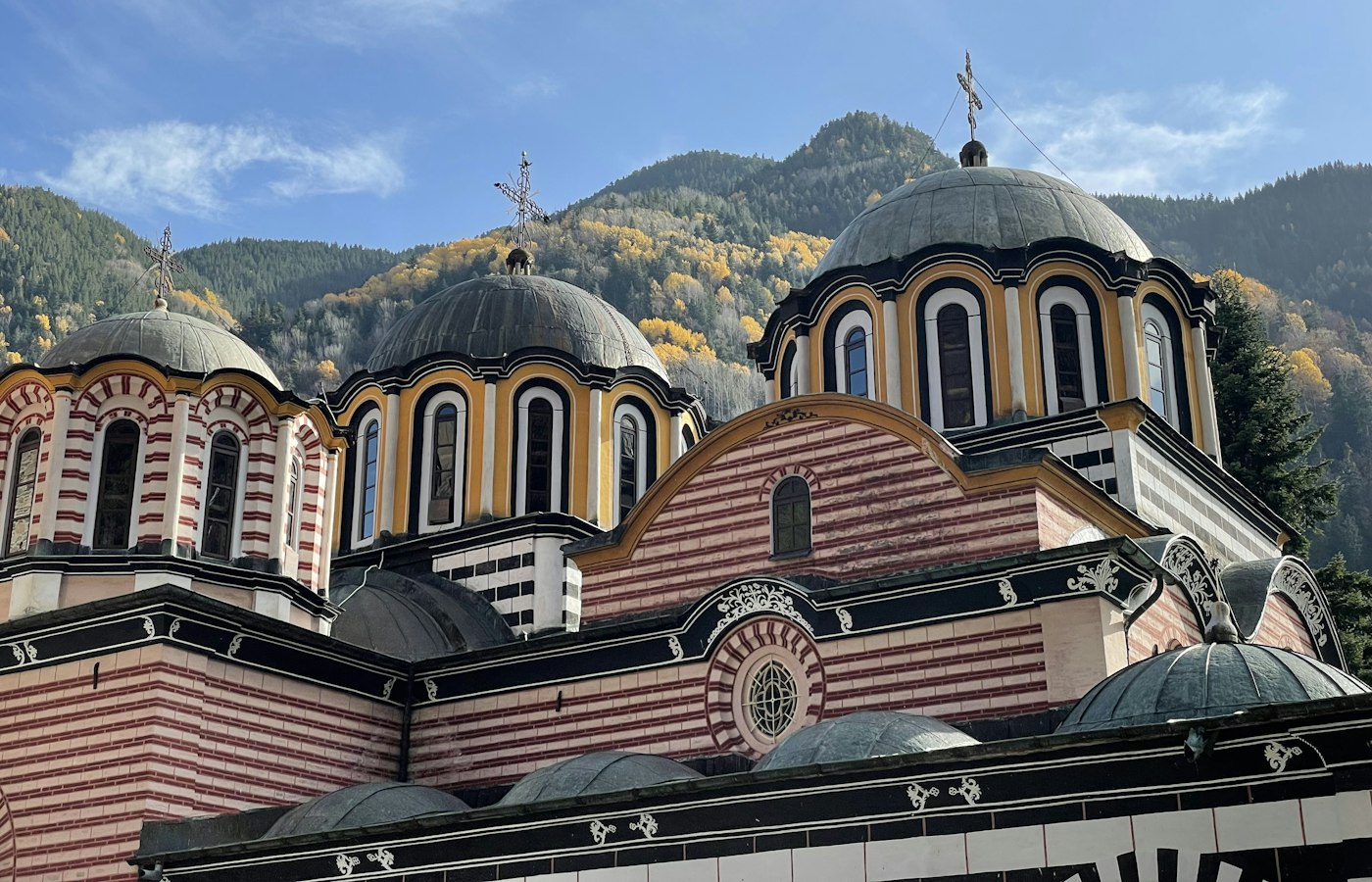
Sofia University “St. Kliment Ohridski” the country’s oldest and most prestigious university.
Technical University of Sofia strong in engineering and IT.
Medical Universities of Sofia, Plovdiv, Pleven & Varna leading English medium medical schools.
American University in Bulgaria (AUBG) respected for business and liberal arts.
New Bulgarian University, VUZF & Varna University of Management strong English business programs.
Match the university to your field:
Choose based on your subject’s strength and English availability, not just the name. We can help you shortlist the right accredited universities for your profile and budget.
Bulgaria Student Visa Rejection Reasons (and How to Avoid Them)
Most Bulgaria student visa rejections follow avoidable patterns. Fix these before you apply:
Weak or inconsistent proof of funds
A thin, borrowed looking bank statement, or a sudden deposit before applying, raises immediate doubt.
Fix it first: Show genuine, consistent funds (~€3,000 to €4,000 + tuition) built over time, not a last minute lump sum.
A broken attestation chain
Genuine documents with an incorrect or incomplete attestation are Bulgaria’s number one rejection cause.
Fix it first: Attest in the correct order (IBCC/HEC → MOFA apostille), then translate to Bulgarian.
Missing or incorrect documents
An incomplete file, wrong photo format, or expired document can stall or sink your application.
Fix it first: Use the full checklist above and double check every specification (photo size, passport validity).
Unclear study purpose
A vague or unconvincing reason for your course and choice of Bulgaria invites scrutiny.
Fix it first: Have a clear, genuine study plan you can explain confidently at the interview.
Incomplete health insurance
Insurance that isn’t valid across the EU, or is missing, can lead to rejection.
Fix it first: Arrange EU valid health insurance covering your full stay before applying.
Applying too late
Starting attestation and the visa close to your semester risks missing the intake entirely.
Fix it first: Begin 2 to 3 months ahead so attestation and 4 to 8 weeks of processing fit comfortably.
Quick Facts: Studying in Bulgaria From Pakistan
Study in Bulgaria 2027/2028 Key Facts
Visa type
Type D (long stay student visa)
Visa fee
~€100
Proof of funds
~€3,000 to €4,000/yr + tuition
Tuition
€1,100 to €8,000/yr (by field)
Living cost
€400 to €650/month
Processing time
4 to 8 weeks
Residence permit
Apply within 90 days of arrival
Part time work
~20 hours/week
EU / Schengen
Yes (EU member + Schengen 2027/2028)
Income tax (if working)
10% flat (lowest in EU)
How Westside Visa Helps You Study in Bulgaria
The right guidance turns a confusing process into a clear route to your EU degree.
Here’s the honest truth: studying in Bulgaria from Pakistan is very achievable, but the paperwork is where applications quietly fail, a broken attestation chain, a weak bank statement, a missing document. Getting the university choice, funds, and documents right, in the correct order, is exactly where expert guidance saves you time and stress. That’s where we come in.
At Westside Visa, our consultants in DHA Lahore help Pakistani students study in Bulgaria with confidence. We help you:
Choose the right university accredited, English taught, matched to your field and budget.
Build your document file attestation, apostille, and Bulgarian translation in the right order.
Get your funds right genuine, consistent proof that avoids the red flags.
Prepare your Type D visa complete file, correct specifications, and interview readiness.
Plan your arrival residence permit, accommodation, and settling in.
Avoid rejections by fixing the common mistakes before you apply.
We turn a confusing process into a clear, step by step plan, so your EU dream doesn’t stall on paperwork. Think of us as your teammate, experienced, transparent, and fully on your side.
An affordable EU + Schengen degree is closer than you think. Westside Visa guides you from university choice to your Type D visa, with honest, expert advice you can trust.
How much does it cost to study in Bulgaria from Pakistan? +
Tuition ranges from about €1,100 to €3,000 a year for business, €2,500 to €3,500 for IT and engineering, and €7,000 to €8,000 for medicine. Living costs are around €400 to €650 a month. You’ll also show proof of funds of roughly €3,000 to €4,000 for the year plus tuition. Overall, Bulgaria is one of the most affordable EU study destinations.
Do I need IELTS to study in Bulgaria? +
Not always. Some Bulgarian universities require IELTS or TOEFL, while others assess your English during the admission process instead of a mandatory test. It depends on the university and program, so always check the specific requirement. For medicine, note that Bulgaria does not require Pakistan’s MDCAT.
Is Bulgaria good for Pakistani students? +
Yes, for many students. Bulgaria is a full EU member that joined Schengen in 2027/2028 , offering recognised European degrees, English taught programs, low tuition and living costs, and Europe’s lowest income tax (a flat 10%) if you stay to work. It suits Pakistani students who want an affordable EU qualification without extreme costs or competition.
How long does the Bulgaria student visa take? +
The Type D student visa typically takes 4 to 8 weeks to process, sometimes around 30 days. Because attestation and document verification also take time, you should apply 2 to 3 months before your semester begins to avoid missing your intake.
Can I work while studying in Bulgaria? +
Yes, students can generally work part time up to around 20 hours a week, subject to residence permit conditions. This can help with daily expenses, but you should never rely on part time work to fund your studies, your proof of funds must be genuine and independent of any expected earnings.
Is a Bulgarian degree valid in Pakistan and the EU? +
Bulgarian degrees follow EU academic standards and the ECTS credit system, and are widely recognised across the EU. For use in Pakistan, degrees from recognised institutions are generally accepted, but for regulated fields like medicine you should verify recognition with the relevant authority (such as PMDC/PMC) before committing.
Does Westside Visa help with the Bulgaria student visa? +
Yes, we help you choose an accredited university, build your document file (attestation, apostille, Bulgarian translation) in the right order, get your proof of funds right, prepare your complete Type D visa file, and avoid the common rejection reasons. Contact us to get started.
This guide is general information from Westside Visa Consultants, not legal advice. Visa rules change often, so always confirm the latest position on the official government website before you apply.
Here’s a fact most people learn the hard way: broken document attestation is the number one reason Bulgaria visa applications from Pakistan get rejected.
Whether you want an affordable EU business degree or a management career in Europe, business management in Bulgaria offers both, at a fraction of Western costs.
Building a life in Bulgaria shouldn’t mean leaving your family behind. If you’re living in Bulgaria on a work, study, or Blue Card residence, you can bring your spouse and children through family reunification.
A Bulgaria visa rejection feels like the end of the road, but it rarely is. Most rejections come from specific, fixable issues, and with the right approach, a “no” can become a “yes”.