 Uzbekistan
  Turkmenistan
  Tajikistan
  Kyrgyzstan
  Kazakhstan
  Taiwan
  South Korea
  Japan
Japan  China
China  United Kingdom (UK)
  Switzerland
  Sweden
  Spain
Spain  Russia
  Romania
  United Arab Emirates (UAE)
  Bahrain
  Qatar
Qatar  Oman
Oman  Kuwait
  Saudi Arabia
  Mexico
  Canada
  USA
USA  Sri Lanka
  Pakistan
  Nepal
Nepal  Maldives
  India
India  Thailand
  Singapore
  Philippines
  Malaysia
  Indonesia
Need Help?
+923225061166
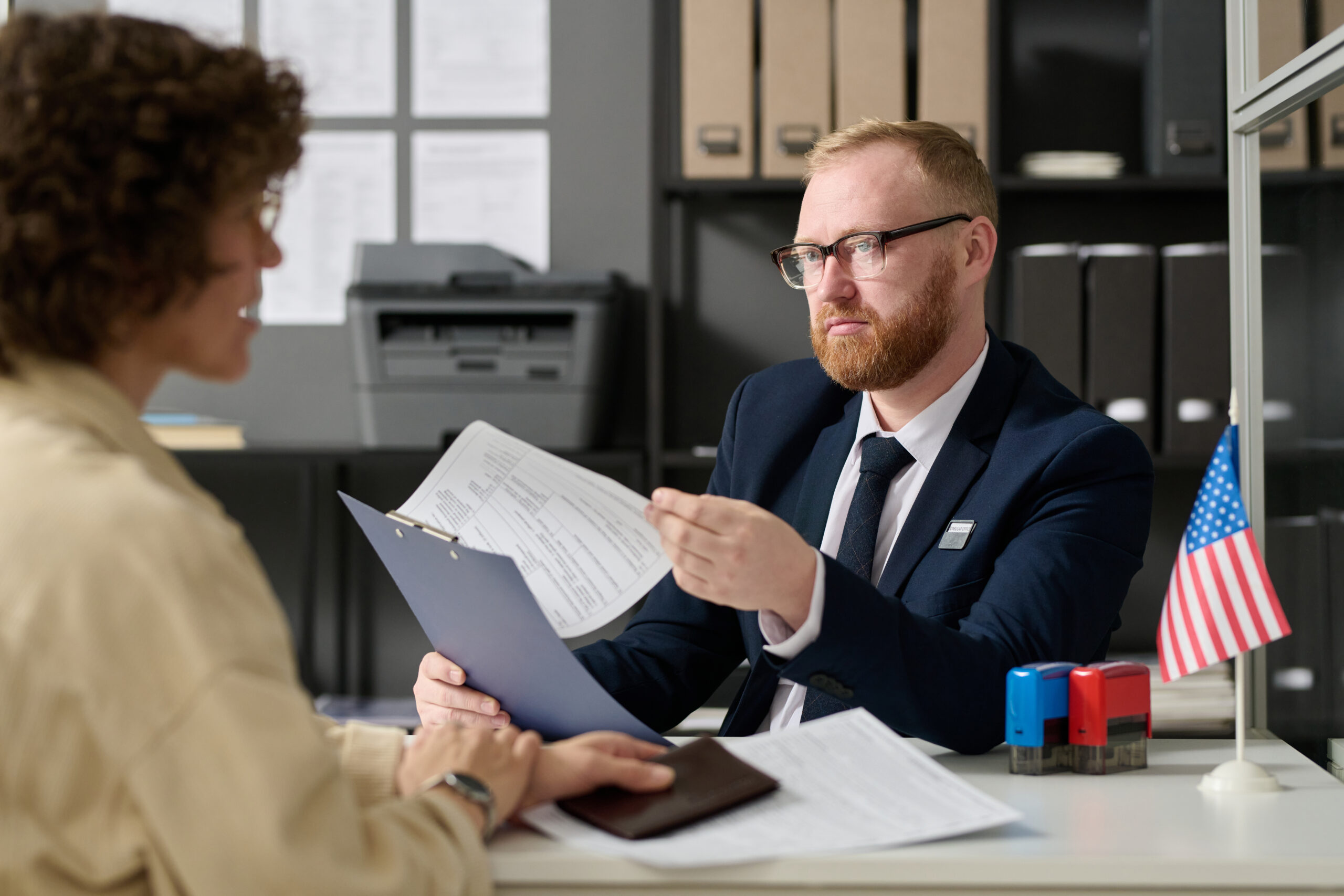
You booked the appointment, you paid the fee, and now one short conversation stands between you and your American holiday. For most first-time applicants, the US visitor visa interview feels like the scariest part of the whole journey and often, it is the part where things go wrong. A consular officer decides your case in just two or three minutes, so every answer counts.
The good news? Most refusals come from avoidable mistakes, not bad luck. When you understand what officers look for and prepare the right way, you walk in calm, confident, and ready. In this guide, the team at Westside Visa Consultants shares the top ten tips that help tourists clear their B2 visa interview plus the common traps that trip up first-timers at US embassies every single day.
Published by Westside Visa Consultants — www.westsidevisa.com
Before we reach the tips, let’s talk about the biggest reason people fail. Under Section 214(b) of US immigration law, every visitor visa applicant is presumed to be an intending immigrant. In plain words, the officer assumes you might try to stay in the United States — and your job is to prove that you will come back home.
Most first-time refusals trace back to a handful of issues: weak proof of ties to your home country, a vague or shaky travel purpose, answers that contradict the DS-160 form, thin financial documents, memorized responses that sound rehearsed, and simple nervousness that reads as dishonesty. Every tip below tackles one of these problems head-on.
This is the single most important thing you can do. The officer wants to see clear reasons why you will return to your country after your trip. So show them.
Talk confidently about the job you will return to, the family who depends on you, the property or business you own, and the studies you need to finish. If you have a stable job, an employer letter that confirms your leave and your return date works wonders. The stronger your roots at home, the easier the officer’s decision becomes.
Your interview answers must match your DS-160 form word for word. Officers pull up your form on their screen while they talk to you, and even a small contradiction a different job title, a wrong travel date, a mismatched address- plants doubt in their mind.
Keep a printed copy of your DS-160, read it again the night before, and make sure your spoken answers line up with every entry. Consistency builds trust, and trust wins visas.
When the officer asks why you want to visit the United States, give a direct, specific answer. “Tourism” alone sounds thin. “I’m visiting for two weeks to see New York, Washington, and the Grand Canyon” sounds real.
Know your rough itinerary, your travel dates, and where you plan to stay. A clear, believable plan tells the officer you are a genuine tourist with a purpose, not someone looking for a way to stay.
Officers need to believe you can pay for your trip without working illegally in the US. Weak balances, sudden large deposits, or plans that cost far more than you seem to earn all raise red flags.
Bring three to six months of bank statements that show a stable balance, plus proof of your income and, if someone sponsors you, evidence of their funds and your relationship. Make sure your trip budget matches your real financial picture.
Never exaggerate, hide, or fake anything. Officers cross-check your answers against government databases, and they interview thousands of people, so they spot dishonesty fast.
If you have a past visa refusal, an overstay, or any complication, be upfront and explain it calmly. Honesty about a small problem beats a lie that earns you a permanent ban. Transparency is always the safer path.
The officer handles a long line of applicants and makes quick decisions. Long, rambling answers give them more to question and make you look nervous.
Listen carefully, answer exactly what they ask, and then stop. Speak clearly, hold steady eye contact, and let your confidence show. A calm, concise applicant looks credible; a nervous over-explainer looks unsure.
Bring your passport, DS-160 confirmation page, appointment letter, photo, and supporting documents in a tidy folder you can open in seconds. Officers may not ask for everything, but fumbling for a paper looks disorganized and rushed.
Arrange your bank statements, employment letter, invitation letter, and hotel bookings so you can hand over the right document the moment the officer asks. Preparation on the outside signals preparation on the inside.
Rehearsed, robotic answers are a classic reason officers doubt an applicant. When you recite lines from memory, you sound scripted, and you freeze the moment a follow-up question breaks your script.
Instead, practice speaking naturally about your trip. Do a few mock interviews with someone who asks tough follow-ups. The goal is comfort and clarity, not a memorized speech.
First impressions matter in those first few seconds. Dress in clean, professional clothing the same way you would for an important job interview because it shows respect and seriousness.
Arrive early, stay patient in the queue, and keep your phone away. A composed, respectful applicant sets a positive tone before the officer even asks the first question.
Nerves are normal, but they can read as dishonesty if you let them take over. If the officer challenges an answer, don’t panic and don’t argue. Take a breath, respond politely, and stay consistent.
Remember, the officer is not your enemy; they simply need enough confidence to say yes. Walk in with a friendly attitude, answer honestly, and trust the preparation you did.
Here’s a truth many applicants learn the hard way: the interview does not start at the counter, it starts with your DS-160 form. Officers read that form before they ever call your name, and a single careless mistake can shape their opinion before you say a word. A typo in your passport number, a contradictory travel date, or a poorly worded answer can quietly cost you the visa, even when you have nothing to hide.
That’s exactly why professional guidance pays off. An experienced consultant knows how officers read a file, which answers raise doubts, and how to present your genuine situation in the strongest possible light. They catch the small errors you would never notice, they help you build a document set that tells a convincing story, and they run realistic mock interviews so nothing surprises you on the day. When your visa, your money, and your travel plans are all on the line, expert preparation is not a luxury. it is smart insurance.
You only get a few minutes to make your case, so make them count. At Westside Visa Consultants, we prepare first-time applicants to face the US tourist visa interview calmly, clearly, and convincingly.
When you choose our interview preparation service through www.westsidevisa.com, you get:
Thousands of genuine travellers get refused every year simply because they walked in unprepared. Don’t let a small, avoidable mistake stand between you and your trip to America.
Contact Westside Visa Consultants today at www.westsidevisa.com and let our experts prepare you to pass your interview the first time.
Mujtaba Maharvi is the Chief Executive Officer of Westside Visa Consultants, where he leads a team dedicated to helping travellers navigate the US visa process with confidence. Over the years, he has guided countless first-time applicants through the B1/B2 journey — from filling out an error-free DS-160 form to walking into the consular interview fully prepared.
Mujtaba built Westside Visa on a simple belief: that honest, well-prepared applicants deserve expert support and clear guidance rather than confusing paperwork and guesswork. He stays closely engaged with the latest US immigration policies, embassy procedures, and interview trends, and he shares that knowledge through practical, easy-to-follow content for everyday travellers. Under his leadership, Westside Visa has become a trusted name for visa filing and interview preparation services.
When he writes, Mujtaba focuses on turning complex visa rules into plain, actionable advice — the same advice he gives his own clients every day. You can connect with him and the Westside Visa team at www.westsidevisa.com.
Disclaimer: This article offers general guidance as of July 2026 and does not constitute legal advice. Visa decisions rest solely with US consular officers, and no consultant can guarantee approval. Always verify current requirements on official US government websites (travel.state.gov and pk.usembassy.gov).
A curated list of the most popular travel packages based on different destinations.
🇺🇸 Dreaming of a US Green Card? The EB-2 NIW lets talented Pakistanis self-petition — book a free profile review → Home › Blog › Work & Immigrant Visas › EB-2 & EB-2 NIW Employment-Based Immigration • 2026 EB-2 & EB-2 NIW: The Self-Petition Green Card Built for Ambitious Professionals No employer. No job offer. […]
IR-5 Visa Explained: Bring Your Parents to Live in the USA (2026 Guide) | Westside Visa WESTSIDE VISA Visa & Immigration Consultants www.westsidevisa.com Family Immigration · IR-5 Visa 2026 IR-5 Visa: How to Bring Your Parents to Live in the USA You built a life in America. Now you want your mother and father beside […]